Best Material for Patio Pavers: A Complete Guide to Choosing the Right Option
Choosing the best material for patio pavers depends on more than appearance. Climate, budget, durability, maintenance, drainage, and how you plan to use the patio all affect the right choice. Concrete pavers are often the best all-around option because they combine affordability, durability, design flexibility, and easy repairs. However, brick, natural stone, porcelain, travertine, and permeable pavers can be better for specific needs.
The key is to choose a material that suits both your property and lifestyle. A beautiful paver may not perform well if it is poorly matched to the climate or installed over an inadequate base.
What Is the Best Material for Patio Pavers?
There is no universal winner. The best patio paver material depends on your priorities.
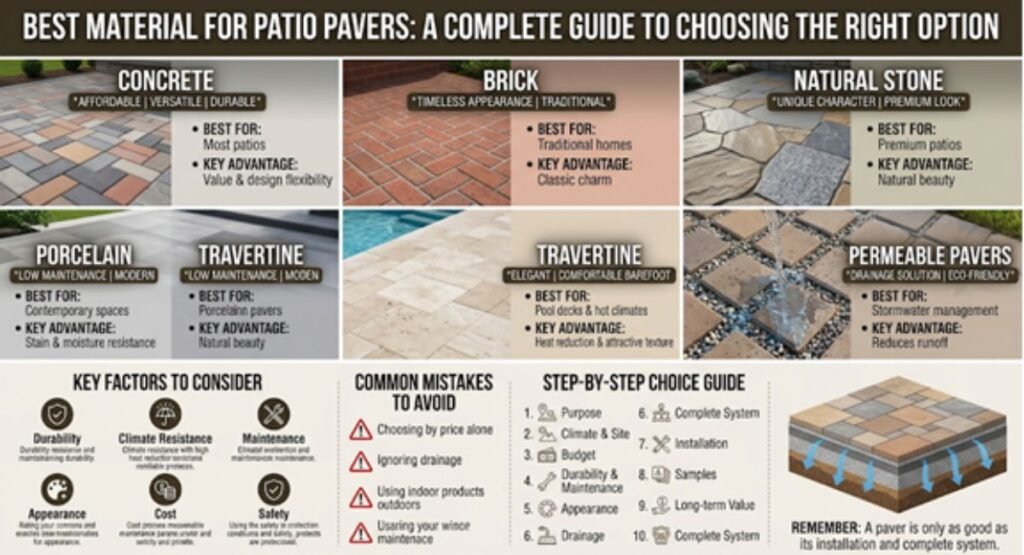
Best Material for Patio Pavers at a Glance
| Material | Best For | Key Advantage | Main Consideration |
| Concrete | Most patios | Value and versatility | May fade over time |
| Brick | Traditional homes | Timeless appearance | Limited design variety |
| Natural stone | Premium patios | Natural character | Higher cost |
| Porcelain | Modern patios | Low maintenance | Requires proper installation |
| Tavertine | Pool areas | Attractive and comfortable | Porous may need sealing |
| Permeable Pavers | Drainage needs | Stormwater infiltration | Specialized installation |
What Makes a Patio Paver Material “Best”?
Durability
A quality patio should withstand foot traffic, furniture, weather, and temperature changes. In cold regions, freeze-thaw resistance is particularly important. Material quality, thickness, and installation also affect long-term durability.
Climate Resistance
Hot climates require consideration of heat retention and surface temperature. Cold climates require attention to water penetration and freeze-thaw cycles. Wet climates require effective grading and drainage.
Maintenance
Consider how much time you want to spend on cleaning, sealing, stain removal, weed prevention, joint maintenance, and repairs. Porcelain generally requires less maintenance than porous natural stone.
Appearance and Design
Pavers are available in different colors, textures, shapes, sizes, and patterns. Your choice should complement the architecture of your home and surrounding landscaping.
Cost and Long-Term Value
Don’t compare materials only by their initial price. Include site preparation, installation, maintenance, repairs, and potential replacement costs. A slightly more expensive material may provide better long-term value.
Safety and Drainage
Pool patios and frequently wet areas require suitable surface texture and slip resistance. Drainage is equally important. Proper grading and, where appropriate, permeable paving can help manage water effectively.
Best Material for Patio Pavers: Comparing the Top Options
Concrete Patio Pavers
Concrete is one of the most popular patio paver materials because it offers an excellent combination of affordability, durability, and design flexibility.
Concrete pavers come in numerous colors, shapes, textures, and patterns. Interlocking designs can create a stable surface, and individual damaged units can often be removed and replaced.
Pros:
- Affordable compared with many premium materials
- Highly versatile
- Durable
- Many design choices
- Relatively easy to repair
Cons:
- Some products can fade
- Periodic maintenance may be required
- Product quality varies
For homeowners seeking the best balance of performance and value, concrete is often the strongest overall choice.
Brick Patio Pavers
Brick is ideal for traditional, classic, colonial, and historic-inspired properties. Its warm appearance provides a timeless look that works particularly well with traditional landscaping.
Brick offers durability and attractive color, but generally provides fewer shapes and design options than concrete. Installation and material costs can also vary considerably.
Natural Stone Pavers
Natural stone is an excellent choice for homeowners who prioritize premium appearance and natural variation.
Common options include:
- Flagstone
- Granite
- Limestone
- Sandstone
- Slate
Natural stone provides unique colors, textures, and patterns. However, porosity, durability, freeze-thaw performance, sealing, maintenance, and installation requirements vary by stone type.
Porcelain Patio Pavers
Porcelain pavers are increasingly popular for contemporary outdoor spaces. Outdoor-rated porcelain can provide excellent stain resistance, moisture resistance, color consistency, and low maintenance.
It is particularly suitable for modern patios where clean lines and consistent patterns are desired. However, porcelain requires an appropriate outdoor installation system and properly prepared base.
Travertine Pavers
Travertine provides a natural, elegant appearance and is frequently considered for pool decks and sunny outdoor spaces. Its texture and heat characteristics can make it comfortable for barefoot areas.
However, travertine is porous and may require sealing and regular maintenance. Its suitability depends on the specific product and installation environment.
Permeable Patio Pavers
Permeable pavers are designed to allow water to move through specially constructed joints and aggregate layers. They are particularly useful where stormwater management and drainage are priorities.
Because permeable paving is a complete system rather than simply a type of surface paver, proper design and installation are essential.
How to Choose the Best Material for Patio Pavers
Consider these factors before making your decision.
Climate
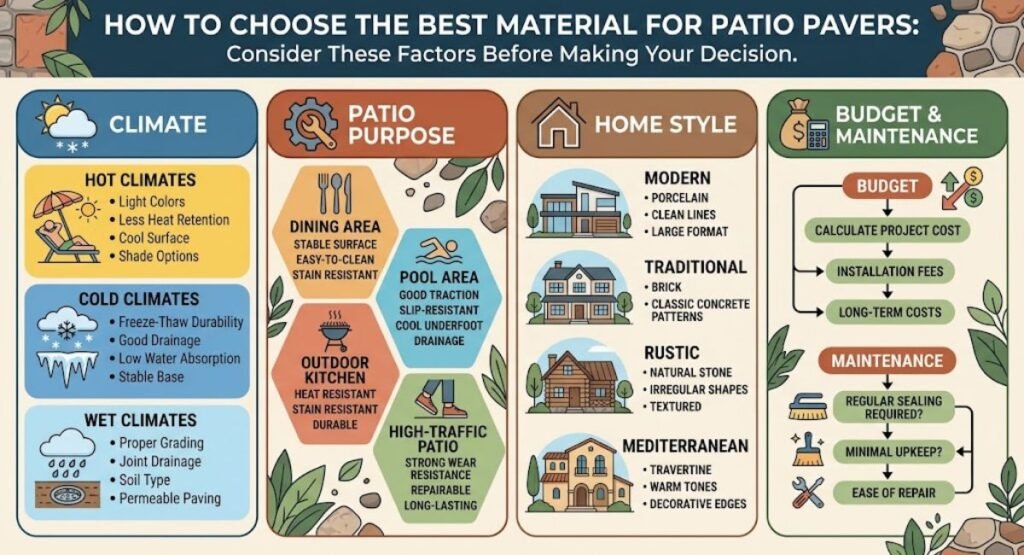
For hot climates, consider light colors, heat retention, surface texture, and sun exposure. Travertine and certain natural stones may be attractive options.
For cold climates, prioritize freeze-thaw suitability, drainage, water penetration, and a properly compacted base.
For wet climates, focus on grading, joint drainage, soil conditions, and potentially permeable paving systems.
Patio Purpose
An outdoor dining area needs a stable, easy-to-clean surface. Pool areas require suitable traction, drainage, and heat performance. Outdoor kitchens benefit from stain-resistant materials, while high-traffic patios need strong wear resistance and repairability.
Home Style
Modern homes may suit porcelain or clean-lined concrete. Traditional properties often work well with brick or classic concrete patterns. Natural stone and travertine can complement rustic and Mediterranean designs.
Budget and Maintenance
Calculate the complete project cost, including installation and long-term maintenance. Also consider whether you prefer a material requiring regular sealing or one that needs minimal upkeep.
Step-by-Step Guide to Choosing Patio Pavers
Step 1: Determine the patio’s purpose. Identify traffic levels and how the space will be used.
Step 2: Evaluate climate and site conditions. Consider temperature, rainfall, humidity, sun exposure, soil, and drainage.
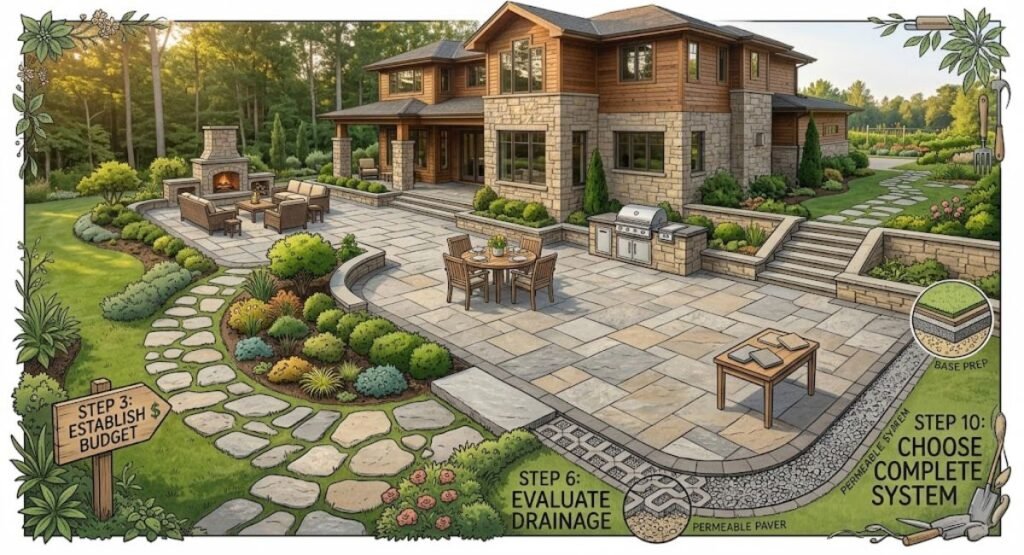
Step 3: Establish your budget. Include material, preparation, installation, maintenance, and future repairs.
Step 4: Compare durability and maintenance. Choose a material appropriate for expected traffic and upkeep preferences.
Step 5: Select your preferred appearance. Compare colors, textures, sizes, patterns, and architectural compatibility.
Step 6: Evaluate drainage. Determine whether conventional drainage or permeable paving is appropriate.
Step 7: Review installation requirements. Check the base, bedding material, edge restraints, joints, and compaction requirements.
Step 8: Compare samples. View samples alongside your home’s exterior, landscaping, furniture, and other hardscape materials.
Step 9: Consider long-term value. Compare cleaning, sealing, repairs, replacement, and expected service life.
Step 10: Choose the complete paving system. The paver is only one part of the installation. Base preparation, drainage, bedding, edge restraints, and workmanship are equally important.
Common Patio Paver Mistakes
Avoid choosing solely by price or appearance. Ignoring climate, drainage, base preparation, or maintenance requirements can create expensive problems later.
Homeowners should also avoid using indoor products outdoors. Always verify that porcelain and other specialized products are specifically designed for exterior applications.
Finally, consider future repairs. Pavers that allow individual units to be replaced can make maintenance significantly easier.
Frequently Asked Questions
What is the best material for patio pavers?
Concrete is often the best all-around option because it provides a strong balance of affordability, durability, versatility, and repairability. However, other materials may be better for specific applications.
What is the most durable patio paver material?
Concrete, porcelain, brick, and properly selected natural stone can all be highly durable. Product quality, climate, base preparation, drainage, and installation quality strongly influence performance.
Are porcelain pavers good for outdoor patios?
Yes. Outdoor-rated porcelain pavers offer low maintenance, stain resistance, moisture resistance, and consistent appearance. Proper installation is essential.
What is the best paver material for a pool?
Travertine and appropriately textured porcelain are popular choices for pool areas because of their appearance, surface characteristics, and performance when properly installed.
Are permeable pavers worth it?
They can be an excellent choice when stormwater management and drainage are important. They allow water to infiltrate through specially designed joints and underlying layers.
Conclusion
The best material for patio pavers depends on your climate, budget, intended use, appearance preferences, maintenance expectations, drainage requirements, and site conditions.
Concrete is generally the best all-around choice for value and versatility. Natural stone is ideal for premium natural character, while porcelain works especially well for modern, low-maintenance patios. Brick offers timeless appeal, travertine is attractive for elegant and poolside applications, and permeable pavers are valuable for drainage-focused projects.
Most importantly, don’t evaluate a patio paver by its price or appearance alone. Consider the complete paving system—including the base, drainage, bedding, joints, edge restraints, and installation quality. The right combination can provide a patio that looks beautiful, performs reliably, and delivers better long-term value.