
Reinforced Retaining Walls in Nassau County
Reinforced retaining walls in Nassau County are not decorative upgrades — they are structural systems designed to manage soil pressure, elevation changes, and load-bearing conditions common across Long Island properties. Because of local terrain, drainage conditions, and zoning rules, many retaining wall projects in Nassau County require engineering review, permit approval, and experienced construction planning to ensure long-term performance and safety.
This page explains when reinforcement is required, how these walls are built, what local regulations apply, and how to plan a compliant project without costly mistakes.
What Is a Reinforced Retaining Wall?
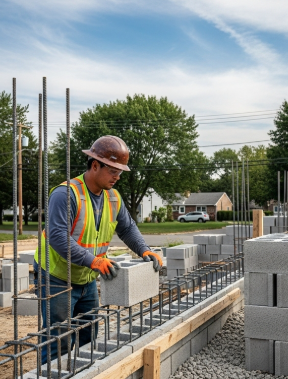
A reinforced retaining wall is a structurally engineered system designed to hold back soil under pressure. Unlike standard or decorative retaining walls, reinforced walls incorporate structural elements such as rebar, geogrid, or engineered footing systems to safely resist lateral loads and prevent movement, failure, or collapse. In Nassau County, reinforced retaining walls are commonly required in areas where wall height exceeds local thresholds, where the wall supports a driveway, parking area, or other structures, and where soil conditions increase hydrostatic pressure. They are also essential in locations with drainage limitations, such as waterfront or sloped properties.
Installing a non-reinforced wall where reinforcement is necessary often leads to bowing, cracking, drainage issues, or complete structural failure. Choosing a properly designed reinforced retaining wall ensures long-term safety, structural integrity, and peace of mind for your property.
Installing a non-reinforced wall where reinforcement is necessary often leads to bowing, cracking, drainage issues, or complete structural failure. Choosing a properly designed reinforced retaining wall ensures long-term safety, structural integrity, and peace of mind for your property.
Lorem ipsum dolor sit amet, consectetur adipiscing elit. Ut elit tellus, luctus nec ullamcorper mattis, pulvinar dapibus leo.
Reinforced Wall Requirements
In Nassau County, reinforcement is commonly required when a retaining wall exceeds 3–4 feet in height, supports additional loads, or is exposed to increased water pressure. However, height alone is not the only factor. Reinforced retaining walls are often necessary for driveways or parking support, sloped or terraced backyards, properties near bays, canals, or waterfront areas, soil conditions with poor drainage, and walls located near structures or property lines. Proper reinforcement ensures the wall can safely resist soil pressure, prevent movement, and maintain long-term structural integrity.
Property Scenarios in Nassau County
Many Nassau County homes experience elevation changes that require structural solutions rather than cosmetic walls. Common scenarios include backyard elevation drop-offs, driveway widening or extension, side-yard access improvements, and coastal or bay-adjacent properties with increased drainage pressure. In these situations, reinforcement is not optional it is a critical safety and compliance requirement to ensure long-term stability and adherence to local building codes.
Codes and Permits
Retaining wall projects in Nassau County are governed by local building codes, zoning regulations, and inspection standards. Reinforced retaining walls typically require permit approval, engineered drawings or calculations, and inspections during or after construction. While requirements vary by township and project conditions, walls that support additional loads or exceed height limits almost always involve engineering oversight to ensure safety and compliance.
Engineering Importance
Engineering approval is not just a formality proper engineering ensures that the wall can safely handle soil and load pressure, that drainage systems are correctly designed, and that liability risks are minimized while meeting long-term performance standards. Skipping engineering or permits can lead to failed inspections, fines, forced removal, or costly rebuilds.
Construction Methods Used for Reinforced Retaining Walls
Reinforced retaining walls are built using construction methods designed to match site conditions, load requirements, and regulatory standards. Common systems include segmental block walls reinforced with geogrid, poured concrete walls with steel reinforcement, and hybrid systems that combine block, concrete, and engineered reinforcement. Each method is selected based on factors such as wall height, soil pressure, and site access, ensuring the structure performs safely and meets long-term requirements.
Proper base preparation and drainage are critical for reinforced retaining walls. This includes excavation to the correct depth, compacted aggregate base systems, drainage stone and drain tile, and pressure relief measures to prevent hydrostatic buildup. Even when high-quality materials are used, failure at the base or drainage level remains the leading cause of retaining wall failure, making these steps essential for structural integrity and longevity.
25
YEARS OF EXPERIENCE
Who Should Build a Reinforced Retaining Wall in Nassau County?
Reinforced retaining walls should be constructed by licensed and insured contractors with experience in engineered retaining systems, working closely with structural engineers and local inspectors. This is not a project for inexperienced installers or general labor crews, as proper planning, alignment, and reinforcement are critical to long-term performance and safety.
Improper installation can lead to wall movement or collapse, drainage failure, structural damage to nearby areas, and costly demolition and replacement. In Nassau County, correcting a failed reinforced retaining wall often costs significantly more than building it correctly the first time, making professional expertise essential from the start.
Planning a Reinforced Retaining Wall Project
Successful reinforced retaining wall projects begin with thorough planning, including site evaluation and elevation analysis, determining the appropriate reinforcement requirements, coordinating with engineers, and defining the project scope and budget expectations. Careful planning ensures that all technical and regulatory considerations are addressed before construction begins.
Early planning not only reduces delays and avoids permit complications but also helps ensure that the finished wall meets both safety standards and aesthetic goals. By addressing these factors upfront, homeowners and contractors can achieve a durable, reliable, and visually appealing reinforced retaining wall.
Get Guidance From Qualified Professionals
Because reinforced retaining walls involve structural and regulatory considerations, professional guidance is essential. Engaging experienced contractors and engineers ensures that the project complies with local building codes, meets safety standards, and addresses site-specific challenges. Proper evaluation at the outset can prevent costly mistakes and unforeseen complications during construction.
In addition to regulatory compliance, professional oversight guarantees safe structural performance and long-term durability. By working with qualified experts, homeowners can be confident that their reinforced retaining wall will remain stable, functional, and secure for decades to come.
Cost Factors for Reinforced Retaining Walls in Nassau County
The cost of a reinforced retaining wall depends on several variables, including the wall’s height and length, engineering and permit requirements, material system selection, excavation access, and overall site conditions. The complexity of drainage systems and reinforcement design also plays a significant role in determining the total investment. Each factor affects not only the upfront cost but also the long-term performance and safety of the wall.
Low-cost installations that cut corners by skipping proper engineering, base preparation, or drainage often result in costly repairs or even complete replacement. Investing in a properly designed and installed reinforced retaining wall from the start ensures structural integrity, compliance with local codes, and long-term durability, ultimately saving time and money.
Start Your Nassau County Project Assessment
Every reinforced retaining wall project is unique. By understanding site conditions, structural requirements, and local regulations, homeowners can avoid costly mistakes and ensure a durable, compliant installation.
Use the project assessment form to outline your wall height, location, and site conditions. This information helps determine the appropriate construction approach and connects you with professionals experienced in reinforced retaining wall projects in Nassau County.
Frequently Asked Questions
Do reinforced retaining walls require permits in Nassau County?
In most cases, yes — especially when walls exceed height limits, support loads, or are located near structures or property lines.
What height retaining wall requires reinforcement?
Walls over 3–4 feet often require reinforcement, but load conditions and soil pressure can trigger requirements at lower heights.
Can a retaining wall support a driveway?
Yes, but driveway-supporting walls typically require engineered reinforcement and proper drainage systems.
How long do reinforced retaining walls last?
When properly engineered and installed, reinforced retaining walls can last for decades with minimal maintenance.

Get a Free Reinforced Retaining Wall Estimate Today
Reinforced retaining walls in Nassau County are structural investments, not cosmetic features. Proper planning, engineering coordination, and experienced construction are essential for safety, compliance, and long-term performance.
 Call now to speak with our driveway paver installation experts
Request a free on-site consultation and detailed quote
Don’t settle for average work. Choose professional driveway paver installation done right the first time.
25
Years of Experience
200+
Successful Projects
2500
Satisfied Customers