Pool Deck Paver Installation
A pool deck isn’t just a surrounding surface — it’s a safety zone, comfort layer, design feature, and long-term investment. Poor pool deck choices lead to slippery surfaces, unbearable heat, water pooling, and premature cracking. This is exactly why pool deck paver installation has become the preferred solution for homeowners, property managers, and builders who want durability without sacrificing aesthetics.
This guide is written for anyone planning a new pool area or upgrading an existing one. It reflects real-world installation experience, climate-aware design decisions, drainage engineering, and material performance in wet, chemically exposed environments. Unlike standard paving or even traditional patio paver installation, pool deck paver installation requires specialized planning, stricter safety standards, and materials specifically engineered to withstand constant moisture, heavy foot traffic, and ongoing chemical exposure.
Short Answer: What Is Pool Deck Paver Installation?
Pool deck paver installation is the process of designing and installing slip-resistant, heat-conscious paving materials around a swimming pool using a reinforced base and drainage-focused layout. It involves excavation, base preparation, proper slope engineering, and the placement of pavers specifically rated for wet environments. Pool pavers outperform concrete by staying cooler, resisting cracks, and allowing easy repairs without full replacement — making them ideal for long-term poolside use.
Key benefits include excellent slip resistance, cooler surface temperatures, design customization, and the ability to repair individual pavers without replacing the entire deck.
How Pool Deck Paver Installation Works
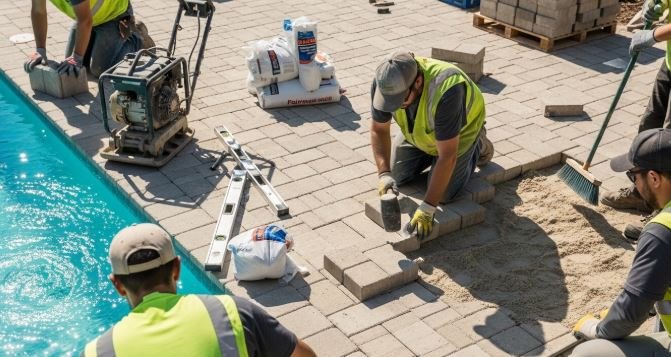
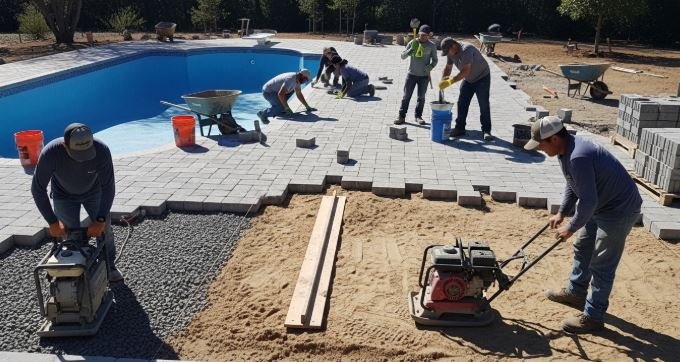
A successful pool deck paver installation starts beneath the surface. The area is excavated to remove unstable soil, followed by a compacted aggregate base designed to support weight and prevent shifting. Drainage slopes are engineered to move water away from the pool and structures. Pavers with certified slip resistance are then installed with precise spacing to allow movement, finished with joint sand and optional sealing.
Why Pool Deck Paver Installation Is Different From Regular Paver Work
Unlike patios or walkways, pool decks are constantly exposed to water, chemicals, and temperature fluctuations. Chlorine and saltwater can degrade inferior materials. Heat retention becomes a comfort issue. Safety codes require slip-resistant finishes. Expansion gaps must accommodate thermal movement. These factors make pool deck paver installation a specialized discipline, not standard paving.
Benefits of Professional Pool Deck Paver Installation
Safety Benefits (Slip Resistance & Drainage)
Pool-rated pavers provide textured surfaces that maintain grip when wet, while engineered slopes prevent standing water — a major cause of accidents.
Heat Reduction Around Pools
Light-colored and porous pavers remain significantly cooler than poured concrete, even in direct sunlight.
Durability in Wet Environments
Individual pavers resist cracking, shift independently, and handle freeze-thaw cycles better than slabs.
Visual Upgrade & Property Value Impact
Well-designed pool decks elevate curb appeal and can significantly increase resale value.
Low Maintenance & Long-Term Cost Savings
Damaged pavers can be replaced individually, avoiding costly tear-outs.
Types of Pavers Used for Pool Deck Paver Installation
Concrete Pavers for Pool Decks
Affordable, versatile, and available in slip-resistant finishes.
Travertine Pavers for Pool Deck Installation
Naturally cool, elegant, and highly resistant to heat — a premium choice.
Porcelain Pavers Around Pools
Extremely durable, non-porous, and stain-resistant with modern aesthetics.
Natural Stone Pavers (Limestone, Sandstone, Bluestone)
Unique textures and colors with excellent grip when properly finished.
Pool Deck Paver Installation: Material Comparison Table
| Paver Type | Slip Resistance | Heat Resistance | Durability | Maintenance | Best Use Case |
|---|---|---|---|---|---|
| Concrete Pavers | High | Medium | High | Low | Budget-friendly pool decks |
| Travertine | Very High | Excellent | High | Medium | Luxury residential pools |
| Porcelain | High | High | Very High | Very Low | Modern, high-traffic pools |
| Natural Stone | High | Medium–High | High | Medium | Custom, natural aesthetics |
Pool Deck Paver Installation Design Considerations
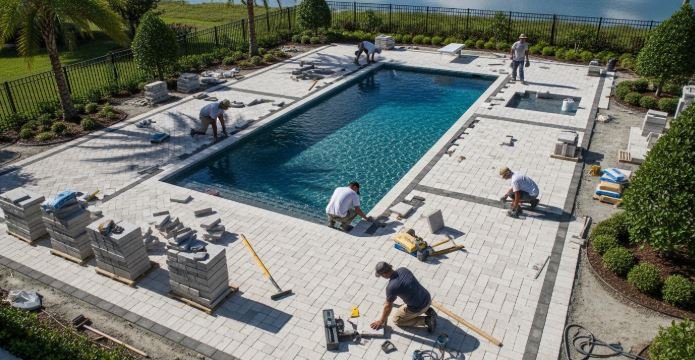
Proper pool deck design balances form and function. Patterns like herringbone improve structural strength, while lighter colors reduce heat absorption. Coping must integrate seamlessly with the pool edge to prevent trip hazards. Drainage slopes (typically 1–2%) ensure water flows away from the pool. Expansion joints allow materials to move without cracking.
Pool Deck Paver Installation Process
Step 1: Site Inspection & Pool Deck Assessment
Evaluate soil conditions, pool layout, drainage paths, and access points.
Step 2: Excavation & Base Preparation
Remove existing materials and excavate to the required depth.
Step 3: Drainage & Slope Engineering
Grade the area to direct water away from the pool and structures.
Step 4: Installing the Bedding Layer
Lay and level bedding sand or setting material.
Step 5: Laying Pavers Around the Pool
Install pavers in the chosen pattern with precise spacing.
Step 6: Cutting & Edge Detailing
Custom cuts ensure clean edges and seamless coping transitions.
Step 7: Joint Sand Application
Fill joints to lock pavers in place and deter weed growth.
Step 8: Final Compaction & Quality Checks
Compact the surface and inspect alignment, slope, and finish.
Step 9: Sealing (When & If Required)
Apply sealer if recommended for the chosen material.
DIY vs Professional Pool Deck Paver Installation
DIY may work for small, low-risk areas, but pool decks involve drainage engineering, safety compliance, and material expertise. Poor slope, inadequate base compaction, or incorrect pavers can lead to costly failures. Professional pool deck paver installation ensures longevity, safety, and warranty protection.
Common Mistakes in Pool Deck Paver Installation
Incorrect slope causing water pooling
Using non-slip-rated pavers
Poor base compaction leading to sinking
Ignoring expansion gaps
Improper coping transitions
These errors often require full reinstallation to fix.
Pool Deck Paver Installation Cost Breakdown
Average cost: $15–$35 per square foot
Material costs: Vary by paver type
Labor costs: Reflect excavation and complexity
Pricing is influenced by pool shape, drainage requirements, demolition needs, and material selection.
Maintenance After Pool Deck Paver Installation
Routine cleaning with pool-safe products preserves surface integrity. Joint sand should be replenished as needed. Sealing schedules depend on material choice. Individual pavers can be lifted and replaced without disturbing the entire deck.
How Long Does Pool Deck Paver Installation Last?
With proper installation and maintenance, pool deck pavers can last 25–50 years. Climate conditions, material choice, and upkeep all influence lifespan.
FAQs About Pool Deck Paver Installation
Is pool deck paver installation better than concrete?
Yes — pavers resist cracking, stay cooler, and are easier to repair.
Are pavers safe around saltwater pools?
Many pavers are specifically rated for saltwater exposure.
Which pavers stay coolest around pools?
Travertine and light-colored porcelain perform best.
How long does pool deck paver installation take?
Typically 3–7 days depending on size and complexity.
Can pool deck pavers be installed over existing concrete?
Yes, with proper preparation and drainage evaluation.
Do pool deck pavers need sealing?
Some materials benefit from sealing; others do not require it.
Are pool deck pavers slippery when wet?
Pool-rated pavers are designed for wet traction.
What is the best base for pool deck paver installation?
A compacted aggregate base with engineered drainage.
How to Choose the Right Contractor for Pool Deck Paver Installation
Look for contractors with specific pool deck experience, proven drainage knowledge, and material certifications. Ask about warranties, past projects, and installation methods. Avoid vague estimates or contractors who treat pool decks like standard patios.
Conclusion: Is Pool Deck Paver Installation Worth It?
Pool deck paver installation delivers superior safety, long-term durability, visual appeal, and return on investment compared to traditional surfaces. For homeowners seeking comfort, reliability, and design flexibility around their pool, professionally installed pavers are not just worth it — they’re the smartest choice.