Patio Installation Buffalo NY: Cost, Types, Process and Best Local Options
Installing a new patio is one of the most valuable outdoor upgrades a homeowner can make especially in Western New York, where summers are short, social gatherings matter, and outdoor space becomes a true lifestyle extension. Patio installation Buffalo NY projects require far more than choosing a surface material. Climate extremes, soil conditions, frost depth, permits, drainage, and contractor expertise all play a role in whether your patio lasts decades or begins shifting after its first winter.
This guide delivers the most complete, experience-backed breakdown available covering costs, materials, step-by-step construction, seasonal timing, and how to choose the right professional for Buffalo’s demanding environment.
Is Patio Installation in Buffalo NY Worth It? (Short Answer)
Yes, when built correctly, patio installation in Buffalo NY offers excellent return on investment, improves outdoor usability, and increases property appeal.
Why it makes sense:
Climate durability: Proper base depth and drainage prevent frost heave.
Strong ROI: Outdoor living spaces consistently rank among top resale upgrades.
Seasonal timing: Spring through fall installations allow curing before winter.
Financial sense: Replacing grass or sloped yards with patios improves function without major structural renovation.
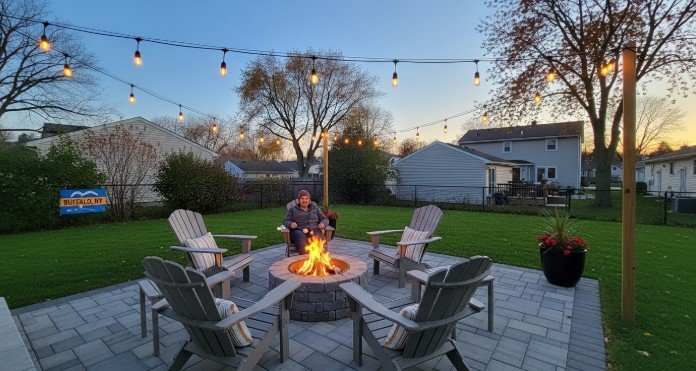
Homeowners who invest in professional design and cold-climate construction methods enjoy long-lasting results that outperform DIY builds.
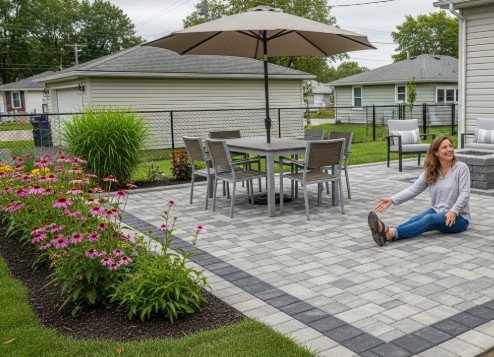
What Patio Installation Buffalo NY Homeowners Need to Know
Buffalo experiences repeated freeze–thaw cycles, heavy snow loads, and saturated spring soil. These conditions demand:
Deep compacted bases below frost depth
Gravel sublayers for drainage
Proper grading away from foundations
Edge restraints to prevent shifting
Ignoring these fundamentals is the fastest way to end up with uneven slabs or sunken pavers.
Patio Installation Options in Buffalo NY
| Patio Type | Avg Cost | Durability | Maintenance | Winter Performance | Best For |
|---|---|---|---|---|---|
| Concrete | Low–Mid | High | Moderate | Good | Large spaces |
| Pavers | Mid | Very High | Low | Excellent | Long-term value |
| Natural Stone | High | Very High | Moderate | Excellent | Luxury designs |
| Gravel | Low | Moderate | Low | Fair | Budget projects |
Local Building Codes & Permit Requirements in Buffalo NY
Some patio projects require permits depending on:
Size and height
Retaining walls
Drainage alterations
Distance from property lines
HOAs may impose additional restrictions on materials or layouts. A licensed contractor typically handles applications and inspections.
Why Hiring a Local Patio Contractor Matters
Buffalo-based professionals understand:
Native clay soil conditions
Frost line requirements
Seasonal scheduling windows
City inspection processes
Local contractors also provide climate-appropriate warranties and maintenance guidance critical for longevity.
Types of Patio Installation Buffalo NY Residents Can Choose From
Concrete Patio Installation Buffalo NY
Pros: Affordable, customizable, fast installation
Decorative options: Stamped patterns, colored finishes, exposed aggregate
Longevity: 20–30 years when properly poured
Concrete suits modern homes and large entertainment spaces but requires control joints and sealing.
Paver Patio Installation Buffalo NY
Advantages:
Interlocking systems resist shifting
Excellent drainage
Individual stones replaceable
Pavers are among the best options for freeze-prone climates.
Natural Stone Patio Installation Buffalo NY
Bluestone and limestone provide upscale appeal and natural textures.
Considerations:
Higher cost
Professional installation required
Periodic sealing
Gravel & Permeable Patio Systems
Benefits:
Budget-friendly
Environmentally responsible
Helps manage stormwater
Best for casual seating areas or secondary spaces.
Patio Installation Buffalo NY Cost Breakdown
Average Cost Per Square Foot
Entry-level: $8–$15 (gravel, basic concrete)
Mid-range: $15–$30 (pavers, stamped concrete)
Luxury: $30–$50+ (natural stone, custom designs)
Factors That Affect Pricing
- Excavation depth
- Drainage systems
- Base thickness
- Site accessibility
- Material quality
- Design complexity
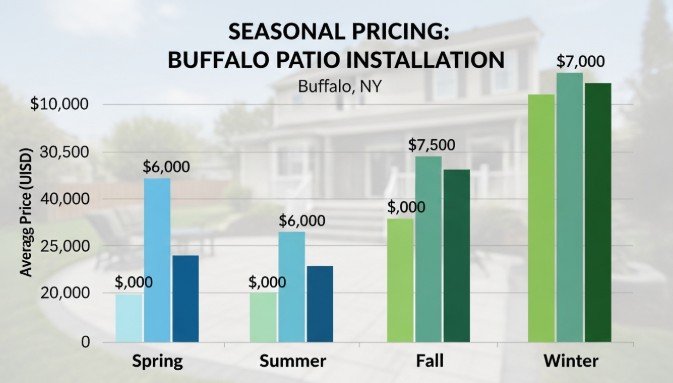
Seasonal Pricing in Buffalo
Spring: High demand
Summer: Peak pricing
Fall: Flexible scheduling
Winter planning: Discounts for early booking
Step-by-Step Patio Installation Buffalo NY Process
Site Inspection & Soil Testing
Contractors evaluate slope, soil composition, and drainage.
Design & Layout Planning
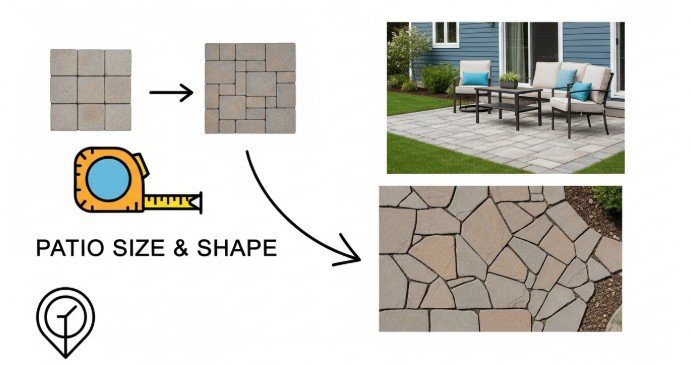
Measurements, patterns, and seating zones are finalized.
Permit Application
Submitted to city offices when required.
Excavation & Grading
Existing sod removed and slope corrected.
Base Preparation for Buffalo Winters
Compacted gravel layered 6–10 inches deep.
Drainage & Frost Protection
French drains or permeable bases installed.
Material Installation
Concrete poured or stones placed over bedding sand.
Jointing, Sealing & Finishing
Polymeric sand or sealers applied.
Final Inspection & Cleanup
Levels checked, debris removed, homeowner walkthrough completed.
Best Time of Year for Patio Installation Buffalo NY
- Spring Projects
- Popular but book early.
- Summer Demand & Scheduling
- Fast curing but premium pricing.
- Fall Installation Benefits
- Ideal temperatures and contractor availability.
- Why Winter Planning Saves Money
- Design consultations and early-season discounts.
How to Choose the Best Patio Installation Company in Buffalo NY
Licensing & Insurance
Protects homeowners legally.
Local Portfolio Review
Ask for nearby project examples.
Online Reviews & Reputation
Look for consistency across platforms.
Warranty Coverage
Foundation guarantees matter most.
Written Estimates & Contracts
Avoid surprise fees.
Experience With Buffalo Soil Conditions
Essential for winter survival.
Common Mistakes During Patio Installation Buffalo NY Homeowners Should Avoid
Poor drainage
Thin gravel bases
Skipping frost barriers
Cheap edging systems
DIY leveling errors
Unpermitted builds
Maintenance Tips After Patio Installation Buffalo NY
Snow Removal Best Practices
Use plastic shovels and avoid salt buildup.
Sealing Schedules
Every 2–3 years for concrete and stone.
Weed Control
Refresh joint sand annually.
Drainage Inspection
Clear outlets each spring.
Winter Protection Strategies
Cover furniture and prevent ice pooling.
Frequently Asked Questions About Patio Installation Buffalo NY
How long does patio installation take in Buffalo NY?
Most projects finish within 3–7 days depending on size and weather.
What is the cheapest patio option in Buffalo NY?
Gravel or basic poured concrete typically costs least.
Do I need a permit for patio installation in Buffalo NY?
Some builds do—especially those involving walls or grading.
Which patio material lasts longest in Buffalo winters?
Pavers and natural stone outperform slabs.
Can patios be installed in cold weather?
Concrete generally requires temperatures above 40°F.
Does patio installation increase home value in Buffalo NY?
Yes—well-designed patios enhance resale appeal.
How deep should the base be for Buffalo patios?
Typically 6–10 inches of compacted gravel.
Should I seal my patio before winter?
Yes—it prevents moisture intrusion and cracking.
Expert Tips From Buffalo Patio Installation Professionals
Engineers recommend deeper bases than southern states.
Contractors favor permeable systems for clay soil.
Slight slopes prevent ice buildup.
Drainage ratios matter more than surface material.
Annual inspections extend lifespan significantly.
Final Thoughts on Patio Installation Buffalo NY
Patio installation Buffalo NY projects succeed when climate-specific construction meets smart material choices and experienced local workmanship.
Focus on:
✔ Durable surfaces like pavers or stone
✔ Deep frost-proof bases
✔ Professional drainage systems
✔ Transparent pricing
✔ Qualified Buffalo contractors
When executed correctly, a new patio becomes a decades-long investment—enhancing daily life, boosting property value, and delivering the outdoor retreat Buffalo homeowners crave.