How Much Paver Base Do I Need?
Installing pavers is one of those projects where success is decided before the first stone is laid. The most common question homeowners, DIYers, and even contractors ask is: how much paver base do I need? Getting this wrong leads to sinking pavers, poor drainage, wasted money, and costly rework. This guide is written to be the most complete, accurate, and practical answer on the internet, combining real-world construction standards with clear calculations anyone can follow.
Short Answer: How Much Paver Base Do I Need for Any Project?
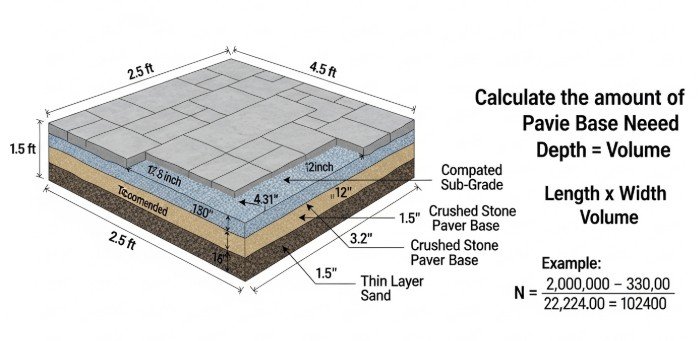
To calculate how much paver base you need, multiply the area of your project (length × width) by the base depth, then account for compaction loss. For most patios and walkways, the general rule of thumb is 4–6 inches of compacted paver base, while driveways require 8–12 inches.
Example: A 10×10 patio (100 sq ft) with a 6-inch base requires about 50 cubic feet of paver base, plus 10–15% extra for compaction.
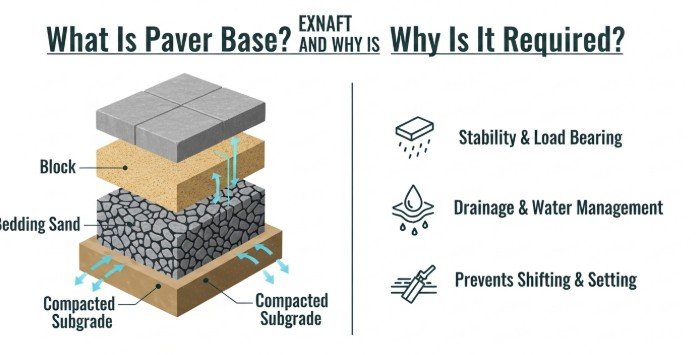
What Is Paver Base and Why Is It Required?
Paver base is a layer of crushed stone or gravel installed beneath pavers to create a stable, load-bearing foundation.
Purpose of Paver Base
Load distribution: Prevents pavers from sinking under weight
Drainage: Allows water to pass through instead of pooling
Frost protection: Reduces movement from freeze-thaw cycles
Paver Base vs Gravel vs Sand
Paver base: Crushed stone with fines that compact tightly
Gravel: Often rounded; does not lock together as well
Sand: Used only as a bedding layer, never as a structural base
Sand alone is not a base and will lead to failure over time.
Why Getting the Right Amount of Paver Base Matters
Accurately calculating how much paver base you need is critical because it:
Prevents shifting and uneven pavers
Ensures proper drainage and frost resistance
Extends the lifespan of your paver installation
Saves money by avoiding over-ordering or mid-project shortages
Improves safety by eliminating trip hazards
A properly built base can make pavers last 25–30 years or more.
How Much Paver Base Do I Need? (By Project Type)
Patios
Recommended base depth: 4–6 inches
Load expectations: Furniture, foot traffic, grills
Walkways & Paths
Recommended base depth: 4 inches
Load expectations: Foot traffic only
Driveways
Recommended base depth: 8–12 inches
Load expectations: Vehicles and heavy loads
Poor Soil or Cold Climate Areas
Add 2 extra inches of base
Clay soil and freeze-thaw cycles require deeper foundations
How to Calculate How Much Paver Base Do I Need
Step 1: Measure the Area (Length × Width)
Square/rectangular areas: multiply length by width
Irregular areas: break into smaller rectangles and add totals
Step 2: Choose the Correct Base Depth
4 inches: walkways
6 inches: patios
8–12 inches: driveways or poor soil
Step 3: Convert Depth to Feet
4 inches = 0.33 ft
6 inches = 0.5 ft
8 inches = 0.67 ft
Step 4: Calculate Total Cubic Feet
Formula:Area (sq ft) × Depth (ft) = Cubic feet
Step 5: Convert Cubic Feet to Tons or Bags
1 ton of paver base ≈ 18 cubic feet
Most bags cover about 0.5 cubic feet
Calculating Paver Base (With Real Examples)
Example 1: 10×10 Patio
Area: 100 sq ft
Base depth: 6 inches (0.5 ft)
Volume: 100 × 0.5 = 50 cubic feet
Add 10–15% extra → 55–58 cubic feet
Example 2: 20×4 Walkway
Area: 80 sq ft
Base depth: 4 inches (0.33 ft)
Volume: 80 × 0.33 = 26.4 cubic feet
Final order: ~30 cubic feet
Example 3: Driveway Section
Area: 200 sq ft
Base depth: 10 inches (0.83 ft)
Volume: 166 cubic feet
Order in bulk (9–10 tons recommended)
How Much Extra Paver Base Should You Buy?
Always order 10–15% more than calculated.
Why?
Base compacts significantly
Minor grading adjustments happen on-site
Avoids project delays from reordering
Professionals never order exact amounts—they plan for loss.
Paver Base Depth & Quantity by Project Type
| Project Type | Recommended Base Depth | Base Needed (per 100 sq ft) | Best Use Case |
|---|---|---|---|
| Patio | 4–6 inches | 33–50 cubic ft | Outdoor seating |
| Walkway | 4 inches | 33 cubic ft | Foot traffic |
| Driveway | 8–12 inches | 67–100 cubic ft | Vehicle load |
| Poor Soil | +2 inches | Increased volume | Clay / frost zones |
Bagged vs Bulk Paver Base: Which Should You Use?
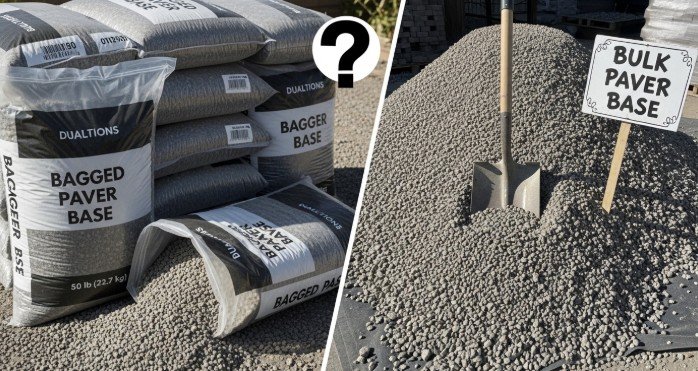
Bagged Base
Easier to transport
Ideal for small projects
Higher cost per unit
Bulk Base
Much cheaper for large areas
Requires delivery space
Best for patios and driveways
If your project exceeds 150 sq ft, bulk delivery usually makes more sense.
Common Mistakes When Calculating Paver Base
Forgetting compaction loss
Using sand as the base
Ignoring soil type and climate
Guessing measurements instead of calculating
These mistakes account for most paver failures.
People Also Ask: Paver Base Questions Answered
How deep should paver base be?
Can I use gravel instead of paver base?
Do I need more base for larger pavers?
Does paver base thickness affect durability?
FAQs: How Much Paver Base Do I Need?
How much paver base do I need for a 10×10 patio?
About 50–60 cubic feet, depending on depth.
How much paver base do I need per square foot?
Approximately 0.33–0.5 cubic feet per sq ft.
How much paver base do I need for a driveway?
Expect 8–12 inches of base, significantly more volume.
Do I need more paver base for clay soil?
Yes, add at least 2 extra inches.
How much paver base do I need if I’m using thicker pavers?
Base depth stays the same; paver thickness does not replace base.
Can you have too much paver base?
Not structurally, but excessive depth increases cost unnecessarily.
How much paver base do I need in cold climates?
Increase depth to prevent frost heave.
Is paver base the same as crushed stone?
Yes, when using crushed stone with fines (¾” minus).
Conclusion: How Much Paver Base Do I Need to Get It Right the First Time
Understanding how much paver base do I need is the foundation of a successful paver project—literally. Accurate measurements, correct base depth, and allowance for compaction ensure your patio, walkway, or driveway stays level and durable for decades. DIYers can handle most projects with careful planning, but larger or load-bearing installations may benefit from professional input. Get the base right, and everything above it will last.