Custom Pool Paver Installation
A swimming pool is often the centerpiece of an outdoor space but the area surrounding it determines how safe, functional, and visually striking that space truly is. Custom pool paver installation is a specialized approach to building pool decks that prioritizes durability, slip resistance, drainage, and design flexibility, all while enhancing long-term property value.
This guide is written for homeowners planning a new pool, property developers upgrading outdoor amenities, and pool renovators looking for a premium, long-lasting decking solution. Unlike standard concrete or tile decks, custom pool pavers are engineered specifically for wet environments and tailored to the pool’s shape, style, and usage.
If you want a pool deck that performs as good as it looks—and lasts for decades—this is the most complete, experience-backed resource you’ll find.
Short Answer: What Is Custom Pool Paver Installation?
Custom pool paver installation is the process of designing and installing interlocking or laid pavers around a swimming pool using materials and methods engineered for constant water exposure, heat, and foot traffic. It becomes the right choice when safety, drainage, repairability, and aesthetics matter more than short-term savings.
Key benefits include excellent slip resistance, cooler surface temperatures, design customization, and the ability to repair individual pavers without replacing the entire deck.
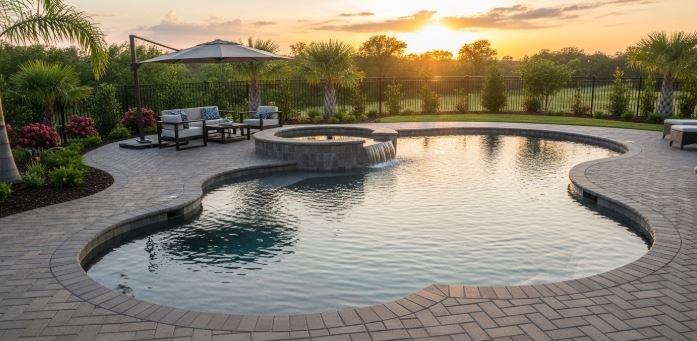
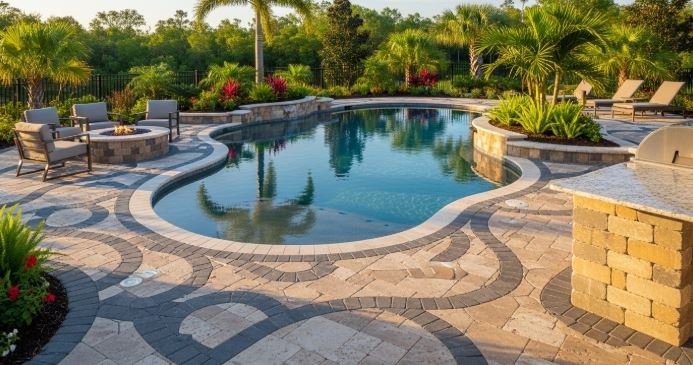
What Is Custom Pool Paver Installation?
At its core, custom pool paver installation involves placing specially rated pavers over a prepared base system that allows for drainage, movement, and long-term stability. Unlike generic paving, the “custom” aspect means the layout, material, spacing, and finishing details are tailored to the pool’s shape, coping, and surrounding landscape.
Compared to poured concrete or tile:
-
Concrete cracks and absorbs heat
-
Tiles can loosen and become slippery
-
Pavers flex with the ground and drain wa
Why Pool Areas Require Specialized Paver Installation
Pool decks face harsher conditions than standard patios. Proper installation accounts for:
Slip resistance to prevent falls on wet surfaces
Heat reflection so bare feet stay comfortable
Water drainage & expansion to prevent cracking, lifting, or erosion
Where Custom Pool Paver Installation Is Commonly Used
Residential backyard pools
Luxury villas and estates
Hotels and resorts
Commercial pool facilities and community centers
Benefits of Custom Pool Paver Installation
Custom pool pavers are chosen for performance as much as appearance:
Design flexibility: Endless colors, textures, and patterns
Long-term durability: Built to withstand water, chemicals, and UV exposure
Enhanced safety: Naturally slip-resistant surfaces
Easy repairs: Replace individual pavers instead of full resurfacing
Higher property value: Premium outdoor finish buyers recognize
Types of Pavers Used in Custom Pool Paver Installation
Concrete Pool Pavers
Pros: Affordable, versatile, widely available
Cons: Can fade over time
Best for: Budget-conscious projects with good sealing
Travertine Pool Pavers
Pros: Naturally cool, elegant, highly slip-resistant
Cons: Higher upfront cost
Best for: Luxury pools and high-end homes
Porcelain Pool Pavers
Pros: Modern look, extremely low maintenance
Cons: Requires precise installation
Best for: Contemporary designs
Natural Stone Pool Pavers (Limestone, Bluestone, etc.)
Pros: Organic, timeless appearance
Cons: Requires proper sealing
Best for: Custom, landscape-integrated pool designs
Custom Pool Paver Installation Process (Step-by-Step Guide)
Step 1: Site Evaluation & Pool Layout Planning
Professionals assess soil conditions, pool geometry, slope, and drainage to prevent future shifting or water pooling.
Step 2: Design Customization & Material Selection
Colors, textures, and patterns are selected to complement pool coping, water color, and surrounding hardscape.
Step 3: Ground Preparation & Base Installation
This includes excavation, compacted aggregate layers, and edge restraints—the foundation of long-term performance.
Step 4: Laying the Pavers Around the Pool
Precision cutting ensures tight fits around curves, steps, and coping while maintaining uniform spacing.
Step 5: Jointing, Sealing & Finishing Touches
Polymeric sand is typically used for stability and weed resistance. Sealing enhances longevity and color retention.
Step 6: Final Inspection & Quality Assurance
Installers check drainage flow, surface level, safety edges, and visual consistency.
Design Options for Custom Pool Paver Installation
- Modern geometric layouts
- Natural free-form pool designs
- Color-blended and multi-tone patterns
- Border accents and decorative inlays
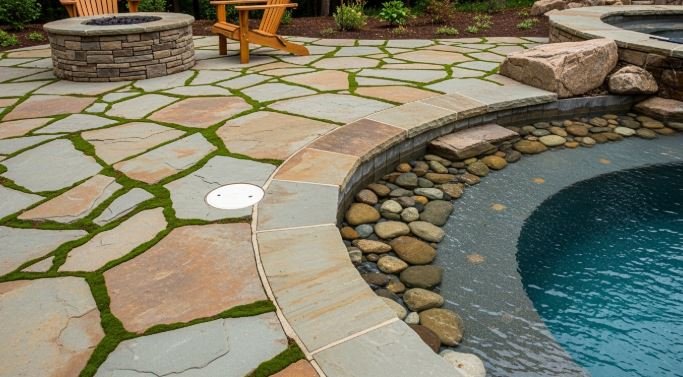
Custom Pool Paver Installation vs Other Pool Decking Options
| Feature | Custom Pool Pavers | Poured Concrete | Pool Tiles | Wood Decking |
|---|---|---|---|---|
| Slip Resistance | High | Medium | Medium | Low |
| Heat Control | Excellent | Poor | Good | Poor |
| Repairability | Easy | Difficult | Difficult | Medium |
| Design Flexibility | Very High | Low | Medium | Medium |
| Longevity | 20–30+ Years | 10–15 Years | 15–20 Years | 8–12 Years |
FAQs About Custom Pool Paver Installation
How long does custom pool paver installation take?
Most projects take 5–10 days depending on size and complexity.
Are pool pavers slippery when wet?
No, pool-rated pavers are designed with textured, slip-resistant surfaces.
What is the best paver material for pool decks?
Travertine and porcelain are top choices for heat control and durability.
How long do custom pool pavers last?
With proper installation, 20–30+ years is common.
Can custom pool pavers be installed over existing concrete?
Yes, if the concrete is structurally sound and properly prepared.
Do pool pavers get hot in summer?
Quality pavers stay significantly cooler than concrete.
Is sealing required after custom pool paver installation?
Highly recommended for stain resistance and longevity.
How much maintenance do pool pavers need?
Minimal routine cleaning and periodic resealing.
Conclusion: Is Custom Pool Paver Installation Worth It?
If you want a pool deck that is safer, cooler, easier to maintain, and visually superior, custom pool paver installation is absolutely worth the investment. It delivers unmatched performance in wet environments while elevating the overall look and value of your outdoor space.
For homeowners and property managers seeking long-term results not temporary fixes custom pool pavers remain the gold standard.