Concrete Pool Deck Installation
A swimming pool is a major investment, but its value, safety, and visual appeal depend heavily on what surrounds it. Concrete pool deck installation and patio paver installation have become the most trusted and widely used solutions for homeowners, builders, and property managers across the U.S. because they deliver unmatched durability, safety, design flexibility, and long-term cost efficiency.When installed correctly, a concrete pool deck does far more than frame your pool. It improves slip resistance, enhances drainage, withstands harsh weather, and significantly boosts property value.
Whether you’re planning a new pool or upgrading an outdated deck, this guide explains how concrete pool deck installation works, what it costs, which finishes perform best, and how to avoid the most expensive mistakes.
Quick Overview: What Is Concrete Pool Deck Installation?
Concrete pool deck installation is the process of constructing a reinforced concrete surface around a swimming pool that is engineered to handle constant water exposure, foot traffic, pool chemicals, and temperature fluctuations. Unlike wood, pavers, or natural stone, concrete creates a continuous, stable surface with fewer failure points and lower long-term maintenance.
Concrete is the right choice when you want a long-lasting, slip-resistant, and customizable pool surround. With professional installation and proper sealing, a concrete pool deck typically lasts 25–40 years, improves pool safety, and delivers a strong return on investment through reduced repairs and increased resale value.
Concrete Pool Deck Installation Explained
What Does Concrete Pool Deck Installation Involve?
A professional concrete pool deck installation follows a precise, engineered process where every stage affects performance and longevity:
Site preparation: Evaluating soil stability, grading, drainage, and setbacks
Base and reinforcement: Installing compacted gravel and steel reinforcement
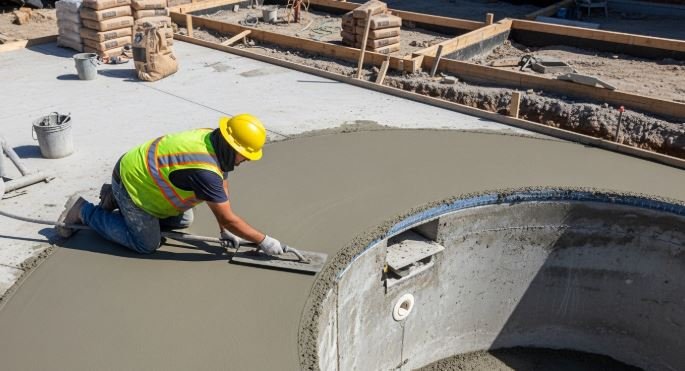
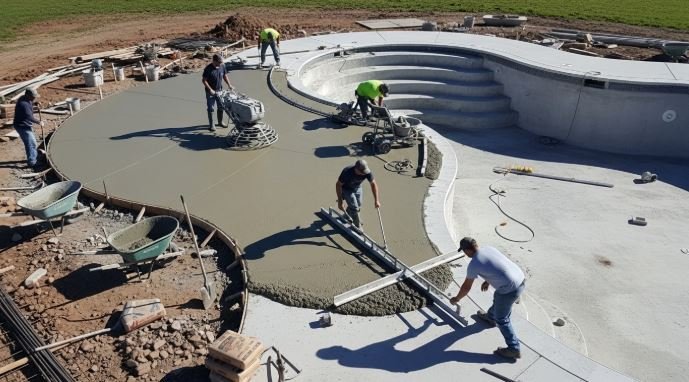
Concrete pouring and finishing: Applying the chosen texture and finish
Curing and sealing: Strengthening the slab and protecting it from moisture, UV rays, and pool chemicals
Skipping or rushing any of these steps almost always leads to cracking, drainage issues, or premature surface failure.
Why Concrete Is the Preferred Material for Pool Decks
Concrete dominates pool decking because it consistently outperforms alternatives:
Durability under water exposure: No rot, warping, or shifting
Slip-resistance options: Textured finishes reduce fall risk
Design flexibility: Can mimic stone, tile, or pavers at lower cost
Cost efficiency: Lower upfront and long-term maintenance costs
Types of Concrete Used in Pool Deck Installation
Broom-Finished Concrete Pool Decks
A broom finish creates fine surface texture for excellent traction. It’s one of the safest and most budget-friendly options.
Pros: High slip resistance, low cost
Cons: Minimal decorative appeal
Stamped Concrete Pool Deck Installation
Stamped concrete replicates natural stone, brick, or tile patterns while maintaining a solid, reinforced slab.
Pros: High-end look, customizable patterns
Cons: Requires proper sealing and periodic maintenance
Exposed Aggregate Concrete Pool Decks
This finish exposes decorative stone within the concrete, creating a visually appealing surface with excellent grip and drainage.
Pros: Durable, slip-resistant, premium appearance
Cons: Slightly higher installation cost
Colored & Decorative Concrete Pool Deck Options
Integral color: Mixed into concrete for permanent color
Surface stains: Applied after curing for design flexibility
UV-resistant sealers are essential in sunny climates to prevent fading.
Concrete Pool Deck Installation Step-by-Step Process
Step 1: Site Inspection & Pool Area Evaluation
Professionals assess soil conditions, slope, drainage flow, and local building codes to ensure long-term stability and compliance.
Step 2: Excavation & Base Preparation
A properly compacted gravel base prevents settling, shifting, and future cracking.
Step 3: Forming, Reinforcement & Expansion Joints
Rebar or wire mesh strengthens the slab
Expansion joints allow controlled movement during temperature changes
Step 4: Pouring the Concrete Pool Deck
Specialized concrete mixes resist moisture intrusion and chemical damage. Weather timing is critical to avoid curing failures.
Step 5: Finishing Techniques for Safety & Aesthetics
Slip-resistant textures and decorative finishes are applied while the concrete is workable.
Step 6: Curing, Sealing & Final Inspection
Curing strengthens concrete, while sealing protects against stains, UV damage, and water penetration.
Concrete Pool Deck Installation Cost Breakdown
Average Cost of Concrete Pool Deck Installation
Most projects fall between $6–$15 per square foot, depending on finish type and location.
Factors That Affect Concrete Pool Deck Installation Pricing
Pool deck size and shape
Finish type (broom, stamped, exposed aggregate)
Soil and drainage conditions
Labor, permits, and local regulations
Cost vs Long-Term Value
Concrete offers fewer repairs, lower maintenance, and better resale value than most alternative materials.
Concrete Pool Deck Installation vs Other Pool Decking Options
| Feature | Concrete | Pavers | Natural Stone | Wood |
|---|---|---|---|---|
| Cost | Moderate | High | Very High | Moderate |
| Durability | Excellent | Good | Excellent | Low |
| Slip Resistance | High (textured) | Moderate | Moderate | Low |
| Maintenance | Low | Medium | High | High |
| Design Flexibility | High | High | Medium | Low |
| Lifespan | 25–40 yrs | 20–30 yrs | 30+ yrs | 10–15 yrs |
Safety, Drainage & Code Considerations for Concrete Pool Deck Installation
Slip resistance: Textured finishes meet pool safety standards
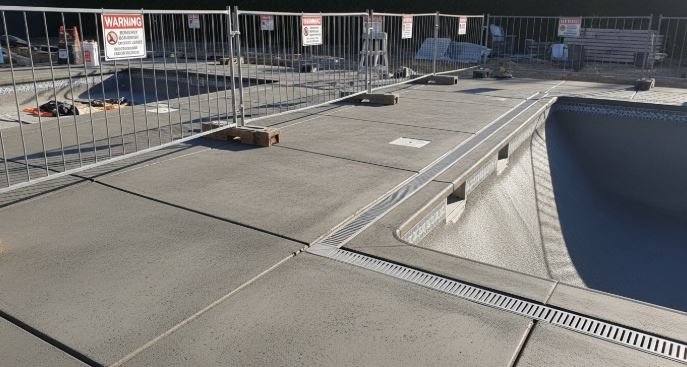
Drainage: Proper slope prevents standing water and erosion
Expansion joints: Reduce cracking from temperature changes
Professional installers follow ADA guidelines and local building codes to ensure compliance.
Common Mistakes to Avoid During Concrete Pool Deck Installation
Skipping proper base preparation
Incorrect slope toward the pool
Rushing curing time
Failing to seal decorative concrete
These mistakes dramatically shorten deck lifespan and increase repair costs.
How Long Does Concrete Pool Deck Installation Take?
Most projects take 3–7 days from preparation to final curing. Light foot traffic is usually allowed after 48 hours, while full pool use is recommended after sealing.
Maintenance Tips After Concrete Pool Deck Installation
Clean regularly with mild detergent
Reseal every 2–3 years
Inspect and address hairline cracks early
Proper maintenance preserves appearance and extends lifespan.
FAQs About Concrete Pool Deck Installation
How long does a concrete pool deck last?
With proper installation and sealing, 25–40 years.
Is concrete pool decking slippery when wet?
Not when textured finishes are used.
Can existing pool decks be resurfaced with concrete?
Yes, if the base is structurally sound.
What is the best finish for concrete pool deck installation?
Exposed aggregate and stamped concrete offer the best safety-to-design ratio.
How soon can I use my pool after installation?
Typically 3–5 days, depending on curing and sealing.
Does concrete crack around pools?
Minor cracking is normal; joints and reinforcement minimize it.
Is stamped concrete good for pool decks?
Yes, when properly sealed and maintained.
Do I need permits for concrete pool deck installation?
Often yes local regulations vary.
Conclusion: Is Concrete Pool Deck Installation Worth It?
Concrete pool deck installation is the smartest choice for homeowners who want long-term durability, safety, and design flexibility without excessive maintenance. It outperforms wood, pavers, and many stone options while enhancing the overall pool experience and property value.
If you want a pool deck that looks premium, stays safe, and lasts for decades, concrete is the clear winner.