How Hot Is Asphalt When Paving?
If you’ve ever driven past a paving crew and felt the intense heat rising from fresh pavement, you’ve probably wondered: how hot is asphalt when paving? The answer isn’t just interesting it’s critical. Asphalt temperature directly impacts durability, compaction, longevity, and safety.
Whether you’re a homeowner planning a driveway, a contractor managing a commercial lot, or simply researching pavement performance, understanding asphalt temperature is essential to ensuring a long-lasting surface.
How Hot Is Asphalt When Paving? (Quick Answer)
Hot mix asphalt is typically between 275°F and 325°F (135°C–163°C) when laid during paving. It’s produced at slightly higher temperatures at the plant, loses some heat during transport, and must remain within a specific range for proper compaction and long-term durability.
Temperature control determines whether pavement lasts 5 years — or 25.
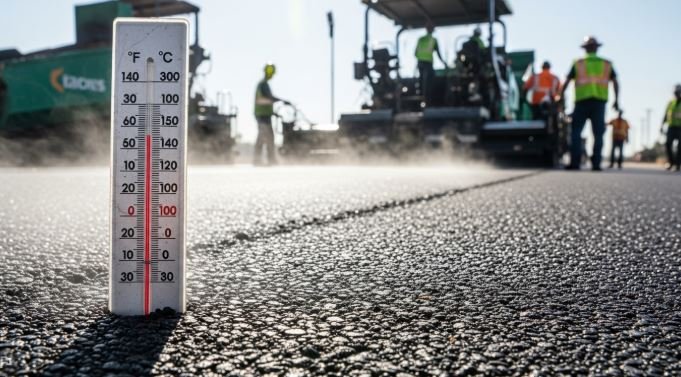
Understanding Asphalt Temperature During Paving
Asphalt paving isn’t just about spreading black material onto a surface. It’s a controlled thermal process involving aggregate heating, bitumen activation, transportation logistics, and timed compaction.
Why Asphalt Must Be Extremely Hot When Paving
Bitumen Binding Properties
Asphalt is made from aggregates (stone, sand, gravel) bound together with bitumen. Bitumen becomes fluid and workable only at high temperatures. When heated, it coats aggregates evenly, allowing strong adhesion.
If the mix is too cool, aggregates won’t bond properly leading to premature cracking and raveling.
Workability and Compaction Science
Compaction must occur while asphalt remains pliable. At optimal temperatures, rollers can eliminate air voids and increase density. Once temperature drops below the compaction window, the surface stiffens and cannot achieve proper density.
Poor density = water infiltration = pavement failure.
Cooling Rate and Density Impact
Asphalt cools from the top down. If compaction isn’t completed before cooling below approximately 175°F–185°F, density targets won’t be achieved.
Temperature control is not optional it’s structural.
How Hot Is Asphalt When Paving Compared to Other Materials?
| Material | Application Temperature | Cure/Set Method |
|---|---|---|
| Hot Mix Asphalt | 275°F–325°F | Cools to harden |
| Warm Mix Asphalt | 215°F–275°F | Cools to harden |
| Cold Mix Asphalt | Ambient | Chemical cure |
| Concrete | Ambient | Hydration reaction |
What Happens If Asphalt Is Too Hot or Too Cold?
Too Hot:
Binder oxidation
Reduced elasticity
Premature brittleness
Blue smoke emissions
Too Cold:
Incomplete compaction
Weak bonding
Increased air voids
Early cracking
Both extremes shorten pavement life significantly.
Asphalt Temperature by Type (Comparison Table)
| Asphalt Type | Plant Temperature | Laydown Temperature | Compaction Range | Best Use Case |
|---|---|---|---|---|
| Hot Mix Asphalt (HMA) | 300–350°F | 275–325°F | 185–275°F | High-traffic roads |
| Warm Mix Asphalt (WMA) | 230–275°F | 215–275°F | 180–250°F | Urban & eco-sensitive areas |
| Cold Mix Asphalt | Ambient | Ambient | Not roller-dependent | Temporary repairs |
| Porous Asphalt | 300–325°F | 275–300°F | 200–275°F | Drainage systems |
How Asphalt Is Heated, Transported, and Laid
Understanding how hot asphalt is when paving requires understanding the full process.
Step 1 – Heating Aggregates and Bitumen at the Plant
Aggregates are heated in either:
Drum plants (continuous mixing)
Batch plants (measured production cycles)
Modern plants use automated temperature monitoring systems to maintain precise heating usually between 300°F and 350°F for hot mix asphalt.
Step 2 – Maintaining Temperature During Transport
Insulated truck beds preserve heat during transit. Travel time matters longer hauls mean more heat loss.
Cold weather, wind, and rain accelerate cooling. Professional crews calculate haul time to ensure proper laydown temperature.
Step 3 – Asphalt Laydown Temperature on Site
Ideal placement temperature: 275°F–325°F.
Crews use:
Infrared thermometers
Thermal imaging cameras
Paver screed heat controls
Thermal segregation (uneven cooling areas) can compromise pavement integrity, so uniform temperature is critical.
Step 4 – Compaction Before Cooling
The “rolling window” begins immediately after placement.
Optimal compaction range:
Start above 250°F
Finish before dropping below 180°F
Asphalt may cool below workable range within 10–20 minutes depending on conditions.
How Fast Does Asphalt Cool After Paving?
Cooling Timeline by Weather Condition
| Weather | Cooling Speed |
|---|---|
| Hot summer (90°F+) | Slower cooling |
| Mild (60–75°F) | Moderate cooling |
| Cold (below 50°F) | Rapid cooling |
| Windy conditions | Accelerated cooling |
When Is It Safe to Walk or Drive on Fresh Asphalt?
Residential driveway: Light foot traffic in 24 hours
Passenger vehicles: 48–72 hours
Heavy trucks: 5–7 days minimum
Asphalt hardens over months, even though it cools within hours.
Safety Considerations: How Dangerous Is Hot Asphalt?
Burn Risk Temperatures Explained
Skin contact at:
140°F can cause burns
160°F+ causes severe burns in seconds
Fresh asphalt at 300°F presents serious hazard.
OSHA requires:
Heat-resistant gloves
Protective boots
Long sleeves
Eye protection
Professional crews follow strict thermal safety protocols.
Environmental & Air Quality Factors
Modern asphalt plants comply with EPA standards. Warm mix asphalt reduces emissions and fumes. Proper ventilation and monitoring protect workers from exposure.
Factors That Affect Asphalt Temperature During Paving
Weather Conditions
Ambient air must typically be above 50°F
Ground temperature should exceed 40–50°F
High humidity slows evaporation but can affect cooling dynamics
Project Variables
Asphalt thickness
Distance from plant
Mix design specifications
Traffic load expectations
Common Mistakes Related to Asphalt Temperature
Paving in cold weather without warm mix adjustment
Overheating binder at plant
Delayed compaction
Ignoring temperature logs
Uneven mat thickness
Temperature mismanagement is the leading cause of premature pavement failure.
How Hot Is Asphalt When Paving in Different Climates?
Hot Climate States (Texas, Arizona, Florida)
Surface layers cool quickly due to solar radiation. Oxidation risk increases. Contractors may adjust mix design to maintain flexibility.
FAQs About How Hot Asphalt Is When Paving
How hot is asphalt when paving a driveway?
Typically 275°F–325°F at laydown for hot mix asphalt.
How hot is asphalt when paving compared to concrete?
Asphalt requires high heat during installation; concrete is placed at ambient temperature and cures chemically.
Can you pave asphalt in cold weather?
Yes, but temperatures must generally exceed 50°F unless warm mix technology is used.
How long does asphalt stay hot after paving?
It cools below 140°F within hours but continues curing for months.
What temperature is too cold to pave asphalt?
Below 40–50°F surface temperature increases failure risk.
Is warm mix asphalt as durable as hot mix?
Yes, when designed properly — with added environmental benefits.
How do paving crews measure asphalt temperature?
Using infrared thermometers and embedded temperature sensors.
Can rain ruin freshly paved asphalt?
Heavy rain during placement can compromise bonding and density.
Final Thoughts: Why Asphalt Temperature Determines Pavement Longevity
So, how hot is asphalt when paving? Usually between 275°F and 325°F — but that number represents far more than heat. For professional projects handled by experienced Patio Installers New York, maintaining this precise temperature range ensures proper compaction, structural strength, and long-term pavement durability in varying climate conditions.It represents:
Proper binder activation
Achievable compaction
Structural density
Long-term crack resistance
Temperature control ensures pavement lasts decades instead of years. Whether installing a driveway or a commercial roadway, professional installation with strict thermal monitoring is non-negotia